Posts

Showing posts with the label multilingual classrooms

Classroom typology to to guide multilingual education teaching strategies

Image
Having many languages in one classroom can be enriching but also challenging, especially because every classroom situation is different. A teaching typology can help bring clarity by identifying common language situations and linking them to suitable teaching strategies. This work is meant to start a conversation, and feedback from teachers, teacher trainers, and policymakers is warmly welcomed on how it can be improved. In the Linkedin article “An MLE Typology that Fits the New Narrative,”   we state that today’s classrooms can no longer be understood through a simple “one home language → one school language” model; instead, we must recognise that there are many contexts where students speak multiple different languages and where no single shared language exists between teacher and learners. A classroom typology can help to identify the relevant difference in classroom situations: © 2026 Karsten van Riezen This framework helps make sense of what we see in India’s recent Teaching ...

Key Insights from the Teaching Learning Practices Survey (TLPS) 2025

Image
Large-scale grassroots observations are rarely done and are a treasure for checking assumptions and developing teaching strategies. The Teaching Learning Practices Survey conducted by the Language and Learning Foundation has a special focus on language. This makes it very  relevant for the study of Multilingual Education. In this blog, we pick out the “jewels” in the treasure related to language. India’s classrooms are linguistically diverse. Children often come to school speaking a home language that is different from the school language. The Teaching Learning Practices Survey (TLPS) 2025 clearly shows this diversity by observing real classrooms across nine states. Instead of relying only on tests or reports, the survey went inside 1,050 classrooms to see how teaching and learning actually happen. This makes the findings especially important for people working on mother tongue–based multilingual education (MLE). The survey finds that 73% of teachers know the children’s home langua...

Smiling in Every Language: Reflections on MLE from Dr.Subir Shukla

Image
It was inspiring to listen to Dr Subir Shukla at the Lead India webinar recently. Subir challenged us that we tend to spend far too much energy and time on the 𝘦𝘹𝘵𝘳𝘪𝘯𝘴𝘪𝘤 dimensions of  multilingual education: developing textbooks, solving orthography issues, creating certificates, etc. We should spend more energy on the 𝘪𝘯𝘵𝘳𝘪𝘯𝘴𝘪𝘤 dimensions: using the languages of the children to connect with the children, to draw them out, to let them engage. That makes more difference in the learning results than getting the curriculum in the "right" languages. If that is the case, we might need to change the narrative around what MLE is about . Let us explore what Subhir had to say! At the September 2025 LEAD Community of Practice meeting, Dr. Subir Shukla challenged a persistent misconception about Multilingual Education (MLE): that MLE is seen as a project but should be more than a project or program — a part of the education system as a whole. While acknowledging the t...

Landscaping Study on Multilingual Education in India

Image
It is quite rare to get a broad snapshot on what is happening in a country with regards to Multilingual Education. I therefore thoroughly enjoyed participating in the recent webinar organized by the National Consortium on Multilingual Education in India (NCMLEI) about an MLE landscaping study that Tata Trusts did in India. In this blog, you can read a few insights, and I strongly recommend watching the whole webinar ! The NCMLEI #6 webinar presented by Akhila Pydah & Dr. Shailaja Menon showcased insights from a nationwide landscaping study on Multilingual Education (MLE)  by Tata Trusts between February and April 2025. This study drew from expert consultations, organisational interviews, field visits across four states, and extensive desk research, the study provided a systematic mapping of MLE efforts across India.  Key Findings Finding 1: Lack of a unified understanding of MLE- India lacks a clear, shared understanding of multilingual education (MLE). Literature define...

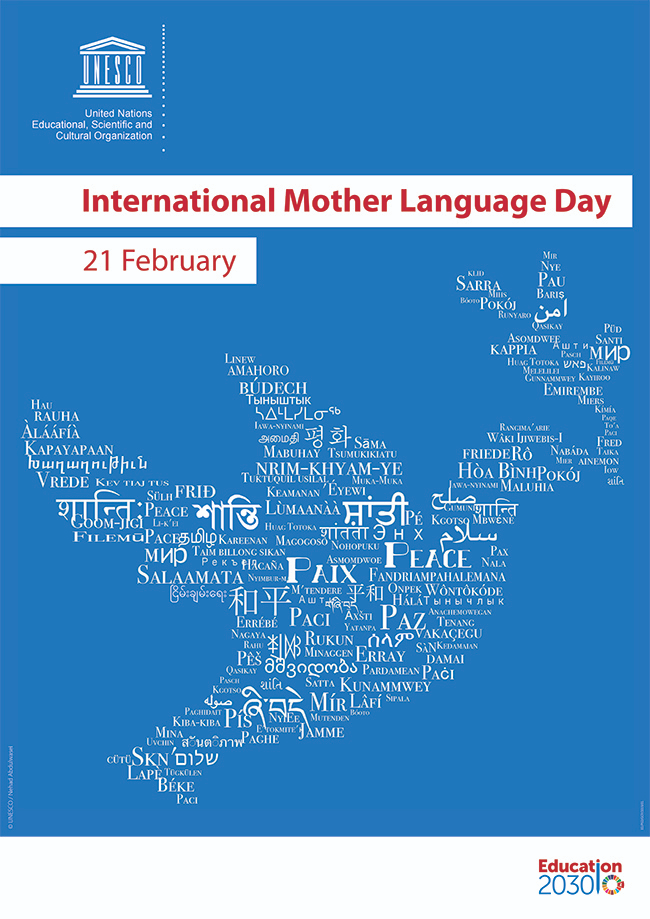
Relevant publications around the 25th International Mother Language Day

Image
The international mother language day usually triggers the publishing of multiple articles on language. This year there were also several relevant publications related to multilingual education . We picked 5 for you that might be of particular interest. The following articles highlight recent developments, offering valuable insights into multilingual education's role in enhancing student learning, cultural identity, and social inclusion. By examining these articles, we can understand the impact of these changes and how they align with the goals of UNESCO’s multilingual education guidelines. The combination of policy developments, local movements, and scholarly perspectives makes this an important time for MLE advocates to continue pushing for greater linguistic inclusivity in education systems. 1. UNESCO's Global Guidance on Multilingual Education: A Valuable Resource A new UNESCO publication on multilingual education came out on International Mother Language day "Languag...